
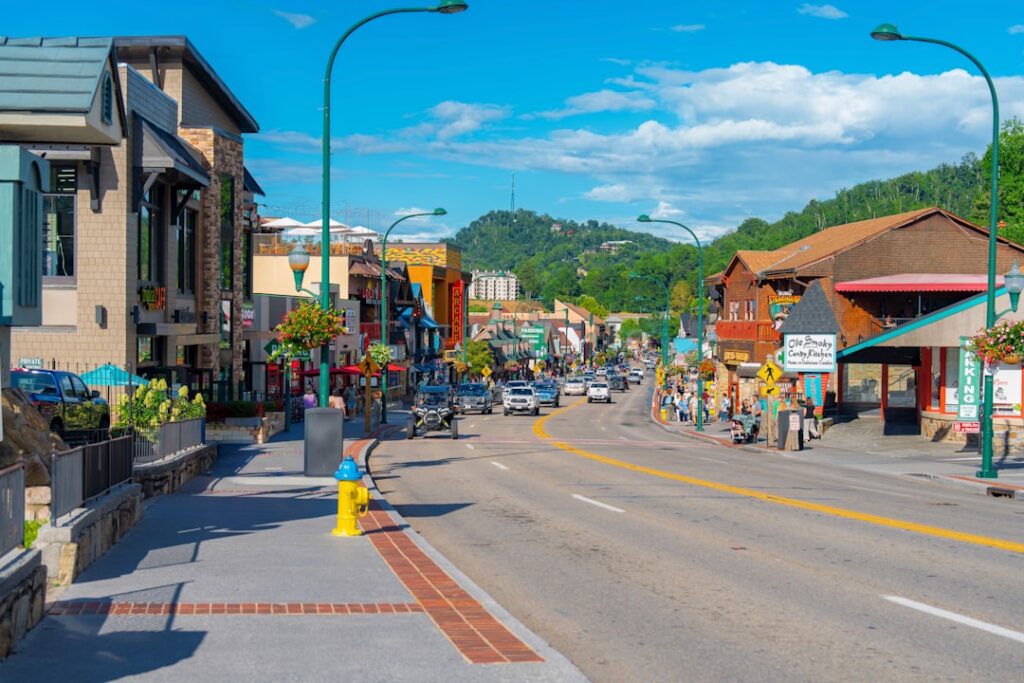
If you’re staying in or visiting Gatlinburg, you can skip the search for downtown parking almost entirely by riding the city’s trolley system. It’s a fleet of rubber-tired, old-fashioned-looking buses that loop through downtown, the arts and crafts community, and the surrounding hotel and cabin areas — and it runs every day of the year.
This guide breaks down exactly which color-coded route to take, what it costs (spoiler: nothing), when the trolleys run each season, where to find a live stop map, and a common point of confusion: the free trolley is not the same thing as the paid “Gatlinburg Tram,” a separate aerial tramway on the other side of town. Photo by Denil Dominic on Unsplash
Quick Answer
The Gatlinburg Trolley is a free public transit system that runs 365 days a year on four color-coded routes — Red, Purple, Blue, and Yellow — connecting downtown, the Gatlinburg Welcome Center park-and-ride, East Gatlinburg, and the Arts & Crafts Community. There’s no fare, no ticket, and no app required to ride; you just flag one down or wait at a marked stop.
How the Routes Work
All Gatlinburg trolleys converge at the Mass Transit Center next to Ripley’s Aquarium of the Smokies on the Parkway, which makes it the easiest place to transfer between routes if your destination isn’t on a direct line.
From there, the four main routes fan out. The Red Route covers River Road, part of Ski Mountain Road, the Parkway between traffic lights 8 and 10, the Airport Road area, Park Vista Hotel, and Cherokee Orchard Road (the access point for the Roaring Fork Motor Nature Trail). The Purple Route runs the downtown Parkway between lights 1 and 5 out to the Gatlinburg Welcome Center park-and-ride and Westgate Resorts. The Blue Route heads east on U.S. 321 to East Gatlinburg, Mills Park, Rocky Top Sports World, and the Arrowmont School of Arts and Crafts. The Yellow Route is the odd one out — it’s a separate, roughly hour-long loop covering the full eight-mile Glades/Buckhorn loop through the Great Smoky Arts & Crafts Community, boarding at the Mass Transit Center near traffic light 5.
Trolleys typically run every 20-30 minutes on the main routes, less frequently on Yellow since its full loop takes about an hour. Stops are marked with trolley-stop signs along the Parkway and side roads, and the system has well over 100 boarding locations scattered across town — you don’t need a reservation or ticket, just wait at a marked stop and wave the driver down if it looks like they might pass you by.
Is the Gatlinburg Trolley the Same as the Gatlinburg Tram?
No, and this trips up a lot of visitors planning a trip. The free, color-coded buses this guide covers are officially called the Gatlinburg Trolley. The “Gatlinburg Tram” (also called the Gatlinburg Aerial Tramway) is a completely different, paid attraction: a cable car that carries riders about 2.1 miles from a downtown station near the Parkway (between traffic lights 8 and 10) up to Ober Gatlinburg’s ski area and amusement park on the mountain.
The tram is a ticketed ride with its own pricing tiers and hours, separate from the city’s transit system, and tickets are sold directly through Ober Gatlinburg’s official site, which also lists current hours and fares. If someone tells you to “take the Gatlinburg tram,” they almost certainly mean this aerial tramway to Ober Gatlinburg, not the free downtown trolley loops.
Fares, Hours, and Seasonal Schedule
There is no fare on the Gatlinburg Trolley. This trips up a lot of visitors because older blog posts and forum threads reference a per-ride fee (it used to cost around 50 cents to a couple of dollars), but the city now operates the entire system free of charge, funded through the city’s own transit budget rather than farebox revenue. If you’re also planning a trip into Pigeon Forge, note that its trolley system is separate and does charge a small per-ride fare or day pass, even though the two systems connect at the Gatlinburg Welcome Center.
Hours shift by season on the main routes. During the regular season (May 1 through October 31), trolleys run from 8:30 a.m. until midnight. In winter (November 1 through April 30), hours are shorter, roughly 10:30 a.m. to 10 p.m. The Yellow Route to the Arts & Crafts Community runs on its own schedule: daily from April through October, then Monday through Saturday only (no Sunday service) in November and December, generally 10:30 a.m. to 6 p.m.
Because exact start and end times can shift slightly by season or for holidays, always confirm the current schedule on the official Gatlinburg Trolley site before you head out, especially late in the evening or during the winter off-season.
Finding Your Stop: Maps and Real-Time Tracking
A printed system map is available at the Gatlinburg Welcome Center, and a digital version lives on the official trolley site linked above, which shows every route overlaid on a map of downtown, East Gatlinburg, and the Arts & Crafts loop.
For live positions rather than a static map, use the real-time locator at gatlinburg.connexionz.net/rtt/public, or download the free ‘Gatlinburg Trolleys’ app from the Apple App Store or Google Play. Both show live vehicle positions and estimated arrival times per stop, which beats guessing during peak summer weekends when routes can bunch up in Parkway traffic.
Tips and Common Mistakes
Park once and ride the rest of the day. The single best move for avoiding downtown Gatlinburg’s parking crunch is to leave your car at the free Park-N-Ride lot at the Gatlinburg Welcome Center (1011 Banner Road) and take the Purple Route into town. It drops you right on the Parkway within a few minutes.
Don’t confuse it with the Pigeon Forge trolley. If your itinerary includes Dollywood or Pigeon Forge attractions, you’ll switch to a different, fare-based trolley system at the Welcome Center — bring a little cash or a card for that leg even though the Gatlinburg side is free.
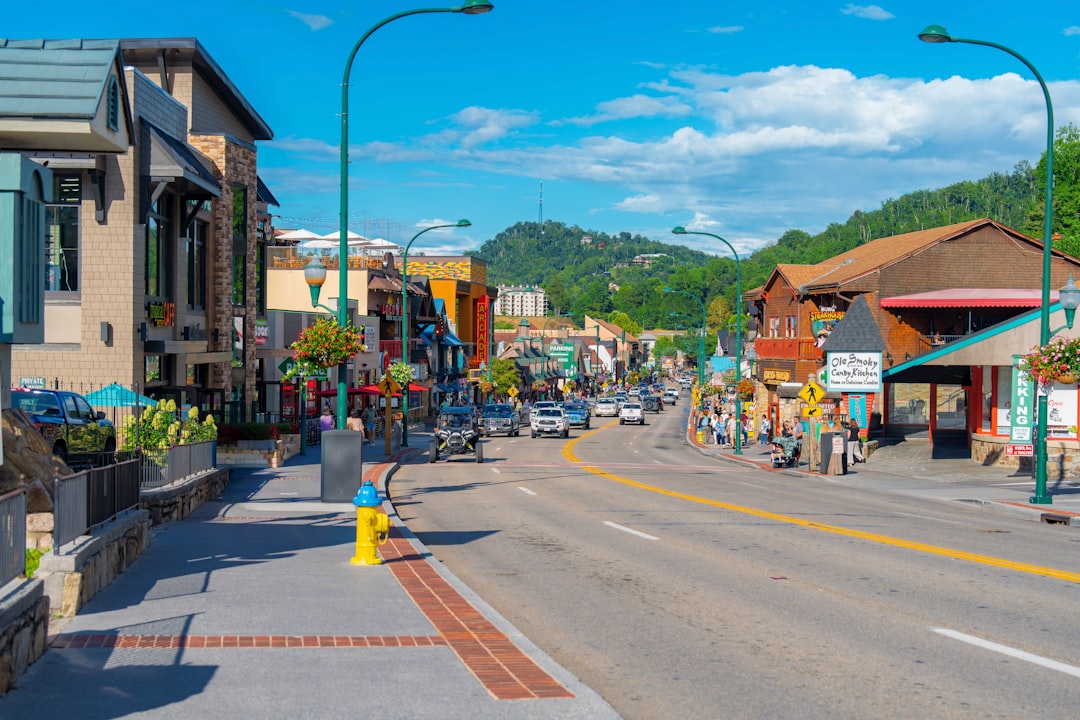
Expect delays on summer weekends and during events like the fall Fantasy of Lights parade or holiday festivals, when Parkway traffic slows every route. Build in extra time rather than cutting it close to a dinner reservation or show. And if you’re headed to the Arts & Crafts Community, plan around the Yellow Route’s own schedule rather than assuming it matches the other routes — it doesn’t run on Sundays once November hits, so confirm current hours on the tracking app before heading out. Photo by Steven Van Elk on Unsplash
Photos

Gatlinburg Trolley FAQs
Is the Gatlinburg Trolley really free?
Yes. All Gatlinburg Trolley routes — Red, Purple, Blue, and Yellow — are free to ride, with no fare, ticket, or app purchase required. It’s funded by the city rather than by rider fares.
What are the Gatlinburg Trolley hours?
During the regular season (May 1-October 31), the main routes run about 8:30 a.m. to midnight. In winter (November 1-April 30), hours run roughly 10:30 a.m. to 10 p.m. The Yellow Route to the Arts & Crafts Community runs daily April through October, then Monday-Saturday only in November and December. Confirm exact times on the official site before late-night or off-season rides.
What’s the difference between the Gatlinburg Trolley and the Gatlinburg Tram?
The Trolley is the free, color-coded city bus system covered in this guide. The “Tram” usually refers to the separate, paid Gatlinburg Aerial Tramway, which carries riders from a downtown station to Ober Gatlinburg’s ski area and amusement park on the mountain. They’re different systems with different routes, fares, and hours.
Where can I find a Gatlinburg trolley stops map?
A printed map is available at the Gatlinburg Welcome Center, and a digital route map is posted on the official trolley site. For live vehicle positions and stop-by-stop arrival estimates, use the real-time locator or the free ‘Gatlinburg Trolleys’ app.
Where do all the Gatlinburg trolley routes connect?
Every route stops at the Mass Transit Center next to Ripley’s Aquarium of the Smokies on the Parkway, making it the main hub for transferring between the Red, Purple, Blue, and Yellow routes.
Can I take the Gatlinburg Trolley to Pigeon Forge or Dollywood?
Not directly. The Gatlinburg Trolley connects with the separate Pigeon Forge trolley system at the Gatlinburg Welcome Center, but the Pigeon Forge side charges its own small fare or day pass, so bring cash or a card for that leg of the trip.
Plan Your Smokies Trip
Build your own Smoky Mountains itinerary — save the cabins, attractions, and restaurants you want to hit. Try the free ExploreTheSmokies trip builder.