
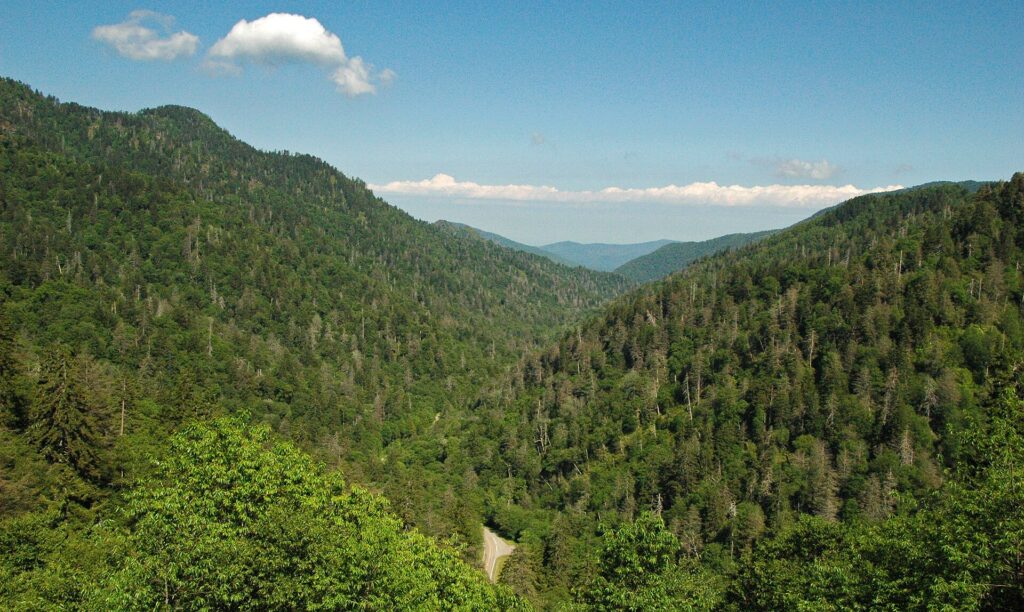
Two valleys in Great Smoky Mountains National Park keep coming up when people ask where to see wildlife: Cades Cove on the Tennessee side and Cataloochee Valley on the North Carolina side. Both are open meadows ringed by forested ridges, and both reward early risers. They are very different trips, though.
This guide compares them on what you can realistically expect to see, how hard each is to reach, how crowded they get, and when to go. By the end you should know which valley suits your schedule, or whether to do both.
Quick Answer
Choose Cataloochee Valley if you want to see elk, which the park reintroduced there starting in 2001. Choose Cades Cove if you want the best odds at a mix of white-tailed deer, wild turkeys and black bears, and you can handle the crowds. If wildlife is your only goal and you dislike traffic, Cataloochee usually feels calmer and more remote.
Cades Cove: What You’ll See and What to Expect
Cades Cove is an 11-mile, one-way loop road. The National Park Service says to plan at least two to four hours, and longer if you hike. White-tailed deer are a common sight in the open fields. Wild turkeys and black bears are also regularly reported, especially in the early morning and evening. Sightings are never guaranteed, since these are wild animals.
The trade-off is traffic. The park notes heavy congestion in summer and fall and on weekends year-round, and a bear or deer sighting can stall the whole line of cars. Use the paved pullouts when you stop, rather than stopping in the travel lane.
One of the best ways to beat the crowds is Vehicle-Free Wednesdays. The loop road closes to motor vehicles from sunrise to sunset on Wednesdays, typically from May through September, leaving it to walkers and cyclists. For 2026 the schedule runs through September 30, so check the NPS site for current dates. Wildlife tends to be more relaxed and the loop is quiet, but the parking lots fill early.
Cataloochee Valley: What You’ll See and What to Expect
Cataloochee is the park’s best-known elk spot. The NPS restored elk here beginning in 2001, and the animals graze in the open fields along Cataloochee Creek. The park also lists Balsam Mountain and Oconaluftee as elk viewing areas on the North Carolina side. The best times are early morning and the last hour or so of daylight. Elk can also be active on cloudy days.
The rut runs from early September through late October, when bulls bugle and gather harems. It is the most dramatic time to visit, and also when visitors most need to keep their distance.
Getting there takes effort. The entrance road from Cove Creek Road is winding and gravel with steep drop-offs and no guardrails, and it is narrow enough that drivers may have to stop or back up for oncoming vehicles. There is no gas, food or cell service in the valley. Bring water and snacks, download offline maps, and check the NPS site for current conditions, since parts of Cataloochee were affected by Hurricane Helene damage and reopened in stages.
Side-by-Side: How to Choose
Pick Cataloochee if elk are the goal, you want fewer people, and you don’t mind a slow drive on a gravel road. Pick Cades Cove if you want deer and a chance at bears with an easy paved road, or if you’re staying in the Townsend, Pigeon Forge or Gatlinburg area. Cades Cove is generally the easier trip from the Tennessee side, and Cataloochee is closer to Maggie Valley and Waynesville in North Carolina.
If you have two days, go to Cades Cove on a Wednesday morning in season for a peaceful walk or ride, and save Cataloochee for a late afternoon in September or October to catch the elk rut.
Tips / Common Mistakes
Stay at least 25 yards (75 feet) from elk, or farther if your presence changes their behavior. The NPS says approaching closer, or at any distance that disturbs or displaces elk, is illegal. Stay on the roadside, don’t walk into the fields, and never touch calves, which mothers may leave alone for a while. Use binoculars or a telephoto lens instead of walking closer.
Don’t feed any wildlife, and don’t use wildlife calls or spotlights, which the park prohibits for elk. Even turkeys can act aggressively, so give every animal room.
The most common mistake is arriving at midday. Wildlife is much more active at dawn and dusk. Others are underestimating Cataloochee’s remoteness, driving in with low fuel or no offline map, and getting frustrated by Cades Cove traffic instead of planning for an early start or a weekday.
Explore more: more things to do in the Smokies.
Cades Cove vs Cataloochee Valley FAQs
Are there elk in Cades Cove?
Elk are reintroduced and best known in Cataloochee Valley, and the park lists Balsam Mountain and Oconaluftee on the North Carolina side as other viewing areas. Cades Cove is known for deer, turkeys and black bears, so Cataloochee is the better choice for elk.
What is the best time of day to see wildlife in these valleys?
Early morning and the last hour or so before dark are the best times in both places. For elk, the NPS also notes that they can be active on cloudy days.
Is the road to Cataloochee Valley difficult to drive?
The entrance road from Cove Creek Road is winding gravel, narrow, and has steep drop-offs with no guardrails. Drive slowly, be ready to pull over for oncoming cars, and check NPS road conditions before you go. Expect no cell service, gas or food in the valley.
How close can I get to elk?
The NPS says willfully approaching within 25 yards (75 feet), or any distance that disturbs or displaces elk, is illegal. If an animal stops feeding or changes direction, you are too close.
Plan Your Smokies Trip
Build your own Smoky Mountains itinerary — save the cabins, attractions, and restaurants you want to hit. Try the free ExploreTheSmokies trip builder.