
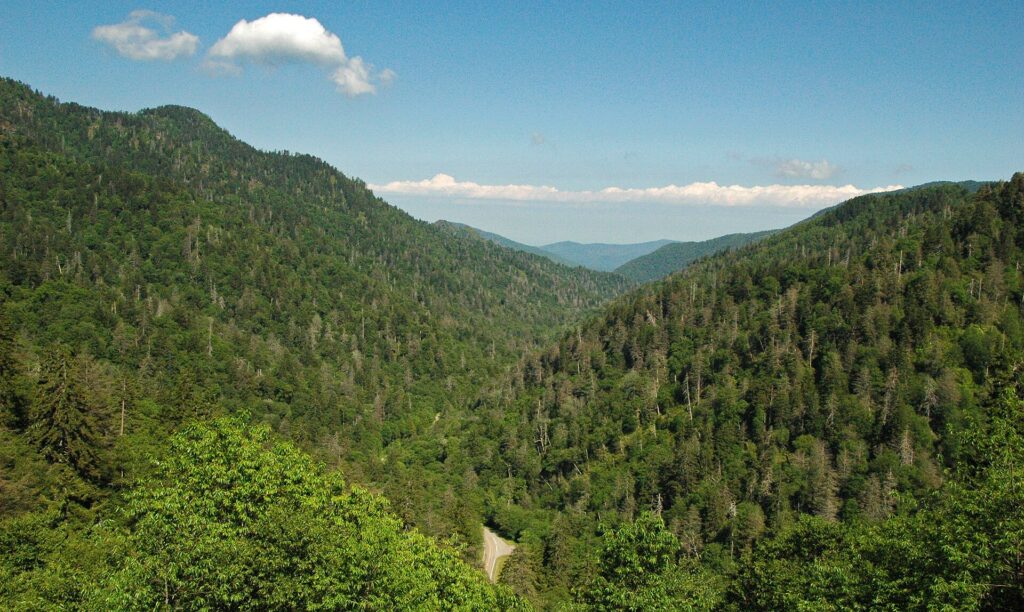
If you’re planning a trip to Cataloochee Valley hoping to see one of the Smoky Mountains’ most impressive wildlife success stories, timing is everything. Elk are creatures of habit, and showing up at the wrong hour often means an empty meadow and a long drive on a bumpy gravel road for nothing.
This guide breaks down exactly when elk are most likely to be out in the open, how the season changes your odds, and the etiquette you need to know before you go — including the legal distance you’re required to keep.
Quick Answer
The best time to see elk in Cataloochee Valley is within the first hour after sunrise or the last hour or two before sunset, when the herds move from the wooded hillsides into the open fields to graze. Midday visits are far less reliable since elk typically retreat to shaded, wooded areas to rest once the sun is up.
Why Mornings and Evenings Work Best
Elk are crepuscular, meaning their activity naturally peaks at dawn and dusk rather than in the middle of the day. In Cataloochee, that translates to herds filtering out of the tree line into the valley’s open pastures — the old homestead fields along Cataloochee Creek — to graze while temperatures are cooler and there’s less human and vehicle activity around.
As the sun climbs and the day warms up, elk tend to move back into the woods to bed down, so a visit between roughly 10 a.m. and 4 p.m. is much more of a gamble. Overcast days, light rain, and the hour or two right after a storm passes can also pull elk back into the open even outside the classic dawn/dusk windows, so don’t write off a cloudy afternoon.
Plan to arrive at least 20-30 minutes before sunrise or a couple of hours before sunset to claim a good spot along the roadside, since the best pull-offs near the fields fill up fast during peak season.
Time of Year Matters as Much as Time of Day
Season changes both how many elk you’ll see and how dramatic the experience is. Mid-September through October is rutting season, when bull elk bugle to attract mates and spar for dominance — this is the single best window for an unforgettable, active display, and it’s also the valley’s busiest stretch of the year.
Spring (May and June) is calving season, and cows with young calves are common nearby, but per the park’s Superintendent’s Compendium, the elk fields themselves are closed to public entry during May through June and August through October, and anytime elk are present, to protect both animals and visitors. You can still view elk from the roadside during these closures — you just can’t walk into the meadow.
Summer mornings and evenings (July, before the August closure resumes) are generally reliable and less crowded than rut season, while winter sightings are possible but less predictable since herds range more widely for food.
Tips and Common Mistakes
Stay out of the fields. Elk fields are closed to public entry during May-June and August-October, and whenever elk are present — view them from the roadside or designated pull-offs using binoculars or a zoom lens instead.
Keep your distance. It’s illegal to willfully approach within 25 yards (about 75 feet) of an elk, or any distance close enough to disturb or displace them; bulls during the rut can be unpredictable and have charged people who get too close.
Never feed elk. It’s illegal, it habituates them to humans, and it makes them more dangerous to the next visitor.
Budget extra driving time. The main access route, Cove Creek Road off I-40 exit 20, is an 11-mile winding, one-lane gravel road with steep drop-offs and no guardrails — it’s slow going, especially in the dark before sunrise, and isn’t ideal for large RVs or trailers.
Bring layers and a headlamp or flashlight if you’re arriving before sunrise, since valley temperatures run cooler than surrounding towns like Maggie Valley and Waynesville, and the parking areas aren’t lit.
Keep noise down and stay near your vehicle. Elk are easily spooked by loud voices, drones, and dogs, and startled herds may not return to the field that day.
Explore more: More Things to Do in the Smokies.
Cataloochee Valley elk viewing FAQs
What time do elk usually appear in Cataloochee Valley?
Most sightings happen within an hour of sunrise or in the last one to two hours before sunset, when elk move from wooded hillsides into the open fields to graze.
What month is best to see elk in Cataloochee Valley?
Mid-September through October, during the rut, offers the most dramatic viewing with bugling bulls and active herd behavior, though elk can be seen in the fields during early morning and evening hours throughout the year.
How close can you legally get to elk in Cataloochee Valley?
Federal regulations prohibit willfully approaching within 25 yards (about 75 feet) of an elk, or any distance that disturbs or displaces the animal. Staying by the roadside and using a zoom lens or binoculars is the safest approach.
When are the Cataloochee elk fields closed to walking?
Per the park’s Superintendent’s Compendium, the fields are closed to pedestrian and horse traffic during May through June and August through October, and any time elk are present. You can still view elk from the roadside during these closures.
Plan Your Smokies Trip
Build your own Smoky Mountains itinerary — save the cabins, attractions, and restaurants you want to hit. Try the free ExploreTheSmokies trip builder.