
The Pigeon Forge Parkway is the single road almost every visitor assumes they have to drive to get anywhere — to Dollywood, to dinner, to the outlet malls, to Gatlinburg. In peak season that assumption can turn a 10-minute errand into a 45-minute crawl through stoplight after stoplight.
The good news is that where you book your cabin has a bigger effect on your trip than any traffic app. Choose a location tied into one of the area’s bypass corridors instead of the Parkway itself, and you can cut most of your daily drive time without giving up easy access to the things that brought you to the Smokies.
Quick Answer
Book a cabin in Wears Valley, along the Veterans Boulevard/Teaster Lane corridor, or between Gatlinburg and Pigeon Forge rather than directly on the Parkway. These areas let you reach Dollywood, downtown Gatlinburg, and the national park using parallel bypass roads, so you only touch the Parkway’s numbered traffic lights when you actually want to stop at a Parkway attraction.
Know the Parkway’s Traffic Light System First
Pigeon Forge numbers its Parkway traffic lights 0 through 10, running from the Smoky Mountain Opry/WonderWorks area at the north end down to the south end of the Parkway, where it meets the Spur Road into Gatlinburg. Locals, hotels, and attractions all give directions by light number instead of street address, so it’s worth knowing this system before you book — a cabin listing that says it’s ‘near light #3’ or ‘near light #8’ is telling you exactly how deep into Parkway traffic that stay will put you for every trip in and out.
As a rule, the middle lights (roughly #3 through #8) see the heaviest congestion because that stretch holds the highest concentration of restaurants, shows, and shops. A cabin whose access route bypasses this middle section entirely will save you the most time.
Cabin Areas That Keep You Off the Parkway
Wears Valley: This area sits on the western edge of Pigeon Forge along Wears Valley Road (Highway 321), which meets the Parkway at light #3, and generally sees noticeably lighter traffic than the Parkway corridor itself. Cabins here connect to Pigeon Forge without funneling through the busiest middle lights, and Wears Valley also gives you a quieter route into the national park through the Metcalf Bottoms entrance if you want to avoid Gatlinburg’s Parkway entrance too.
Along Veterans Boulevard or Teaster Lane: Veterans Boulevard runs parallel to the Parkway from Sevierville down to Dollywood Lane and only meets the Parkway itself near light #8, which means a cabin near this corridor lets you skip most of the numbered lights on any Dollywood run. Teaster Lane does something similar on the north end, running one block over from the Parkway. A cabin close to either road puts you a short hop from Parkway attractions without forcing you onto the Parkway for through-traffic.
Between Gatlinburg and Pigeon Forge: Cabins in the hills between the two towns, often reached off the Gatlinburg Spur (the section of US-441 that connects the south end of the Pigeon Forge Parkway to Gatlinburg), let you skip the Pigeon Forge Parkway entirely for trips into Gatlinburg or the national park. Pair that with the Gatlinburg Bypass, which connects the Spur to the Sugarlands park entrance, and you can reach the park without ever sitting in downtown Gatlinburg traffic either.
Tips and Common Mistakes
Don’t judge a listing by the words ‘Pigeon Forge’ alone — many cabins marketed under that name actually sit in Wears Valley, Cosby, or the hills toward Gatlinburg, so check the actual road access, not just the city name, before booking.
Ask the property manager or check the listing map for the nearest cross street to the Parkway. A cabin one turn off Teaster Lane or Veterans Boulevard can be just as close to attractions as a Parkway-front unit, minus the light-by-light crawl.
Plan Dollywood and dinner trips around Veterans Boulevard even if your cabin is elsewhere — it’s the most reliable way to avoid the mid-Parkway lights regardless of where you’re staying.
Remember that private cabin roads in the hills can be steep and winding; that’s the tradeoff for dodging Parkway traffic, so check drivetrain and road-condition notes for winter stays.
Explore more: browse more places to stay in the Smokies.
Pigeon Forge Parkway traffic FAQs
What do the numbered traffic lights in Pigeon Forge mean?
Pigeon Forge’s Parkway lights are numbered 0 to 10 from north to south, starting near the Smoky Mountain Opry/WonderWorks area and ending at the south end of the Parkway where it meets the Spur Road into Gatlinburg. Locals and businesses use these numbers instead of addresses, so a cabin’s listed light number tells you how deep into the busiest stretch it sits.
Is Wears Valley a good place to stay to avoid Pigeon Forge traffic?
Yes. Wears Valley Road generally has lighter traffic than the Parkway, and cabins there give you access to Pigeon Forge near light #3, which skips most of the Parkway’s busiest middle stoplights.
How do I get to Dollywood without sitting in Parkway traffic?
Take Veterans Boulevard, which runs parallel to the Parkway and meets it near light #8, close to Dollywood Lane. It lets you bypass most of the numbered lights on the way in.
Should I stay between Gatlinburg and Pigeon Forge instead of directly in either town?
It can help. Cabins in that area, often accessed off the Gatlinburg Spur, let you reach the national park via the Gatlinburg Bypass and skip both the Pigeon Forge Parkway and downtown Gatlinburg traffic.
Plan Your Smokies Trip
Build your own Smoky Mountains itinerary — save the cabins, attractions, and restaurants you want to hit. Try the free ExploreTheSmokies trip builder.
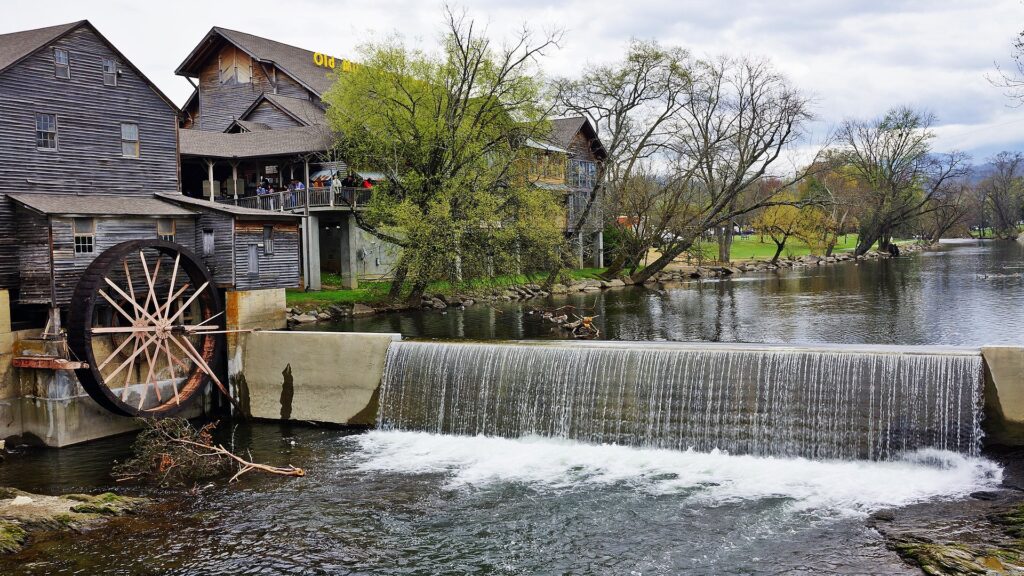
Photo: NealVickers / CC BY-SA 4.0, via Wikimedia Commons.