
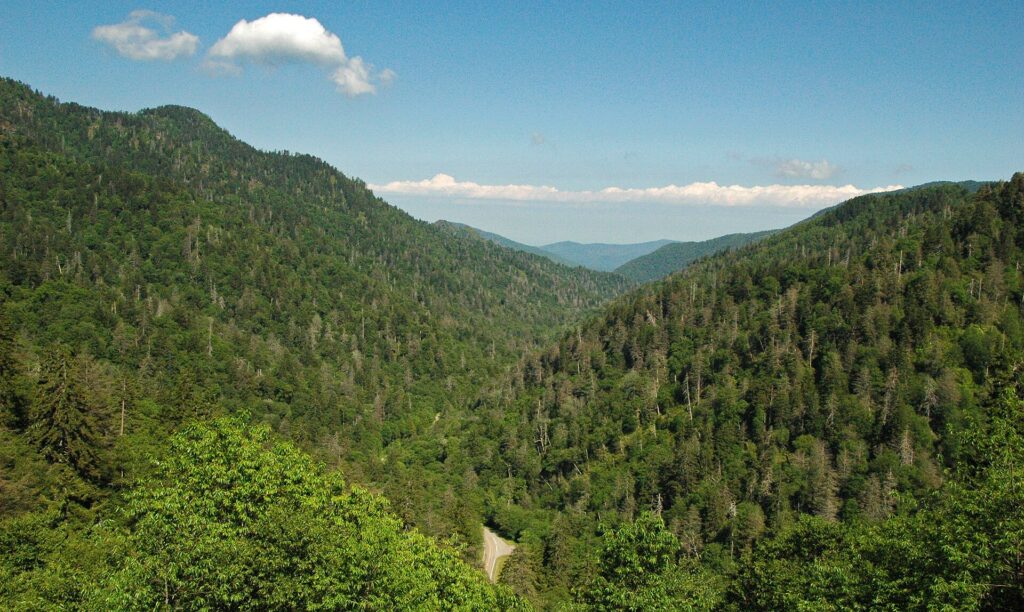
Mount LeConte is the third-highest peak in the Great Smoky Mountains and one of the most popular overnight hikes in the park, thanks largely to the rustic LeConte Lodge waiting near the top. Five trails reach the summit area, but nearly every first-timer narrows it down to two: Alum Cave Trail and Trillium Gap Trail.
Both get you to the same lodge and the same views, but they get you there very differently. Here’s how the distance, elevation gain, and footing actually compare, so you can pick the route that fits your fitness level and what you want to see along the way.
Quick Answer
Trillium Gap Trail is generally considered the gentler overall climb, even though it’s the longer of the two, because its grade starts out mild and stays more even underfoot than Alum Cave’s. Alum Cave Trail is shorter but steeper, with narrow rock ledges and cable-assisted sections near the top, making it feel harder underfoot despite covering less distance.
Alum Cave Trail: What to Expect
Alum Cave Trail runs about 5 miles one-way (roughly 10 miles round trip) from the trailhead on Newfound Gap Road, climbing about 2,700 feet from a starting elevation near 3,834 feet to around 6,593 feet near the summit. It’s the shortest of the five LeConte trails, which also makes it the steepest.
Along the way you’ll pass Arch Rock at about 1 mile (a natural stone arch the trail passes through), Inspiration Point at around 1.5 miles with views of Little Duck Hawk Ridge, and Alum Cave Bluffs at about 2.2 miles, an 80-foot sandstone overhang that’s a popular turnaround point for hikers who aren’t going all the way to the top. Past the bluffs, the trail narrows into rocky, exposed sections with cable handholds bolted into the rock, which can be slick or icy well into spring.
Because it’s the shortest and most scenic route, the Alum Cave trailhead parking lot fills early, especially on weekends and during fall color season.
Trillium Gap Trail: What to Expect
Trillium Gap Trail is longer, about 6.5 miles one-way (roughly 13 miles round trip), with a total elevation gain of around 3,200 feet. It starts near the Grotto Falls trailhead off the Roaring Fork Motor Nature Trail, which is closed to vehicles in winter, so check seasonal access before you plan a trip.
The trail passes behind Grotto Falls at about 1.3 miles, one of the few waterfalls in the park you can walk behind, then continues to Trillium Gap around 2.9 miles, a wildflower-rich saddle between LeConte and Brushy Mountain (a 0.4-mile side spur leads to a Brushy Mountain overlook). The first mile and a half climbs only gently before the grade picks up on the approach to the summit. Trillium Gap is the only horse trail on LeConte, and it’s the route llama supply trains have used to haul food and linens up to LeConte Lodge since 1986, traveling it three days a week from spring through fall. Llamas took over the job from horses and mules because their padded feet are gentler on the narrow trail surface.
Which Trail Is Actually Easier?
It depends what “easier” means to you. By steepness and technical footing, Alum Cave is harder — the payoff for its shorter distance is scrambling over rock and using cables on narrow ledges near the top. By total distance and time on your feet, Trillium Gap asks more of your endurance, since you’re covering roughly three extra miles round trip.
For most first-time LeConte hikers, especially those hiking up to spend the night at the lodge, Trillium Gap’s more even grade feels more approachable even though the hike takes longer. Alum Cave rewards you with more dramatic scenery for less mileage, but it demands more comfort with rock scrambling and exposed footing, particularly on the descent.
Some hikers combine the two by going up one and down the other to see both landmarks, but keep in mind the trailheads are several miles apart by road — you’ll need a shuttle car or a rideshare, since there’s no direct trail connection between the two parking areas.
Tips and Common Mistakes
Start early. Both hikes typically take 6-8 hours round trip, and if you’re heading to LeConte Lodge, you’ll want a comfortable buffer to arrive before evening.
Don’t underestimate the descent. The rocky steps below Alum Cave Bluffs can be harder on your knees going down than climbing up, and loose rock on Trillium Gap’s lower stretches gets slippery when wet.
Carry more water than you think you need — 2-3 liters per person is a good baseline, since there’s no potable water along either trail.
Check conditions before you go, especially in winter and early spring. Ice can linger on Alum Cave’s exposed ledges long after snow melts elsewhere, and the Roaring Fork Motor Nature Trail closes seasonally, which affects access to the Trillium Gap trailhead.
If your goal is an overnight stay, book LeConte Lodge well in advance — it’s the only lodging inside the park and rooms go fast.
Leave pets at home. Dogs aren’t allowed on either trail; the park permits pets on only two trails park-wide, the Gatlinburg Trail and the Oconaluftee River Trail.
Explore more: more things to do in the Smokies.
Mount LeConte FAQs
Which trail to Mount LeConte is the shortest?
Alum Cave Trail is the shortest at about 5 miles one-way (roughly 10 miles round trip), but it’s also the steepest of the five routes to the summit.
Can I hike up Alum Cave and down Trillium Gap?
Yes, some hikers do this to see both landmarks, but the trailheads are several miles apart by car, so you’ll need a shuttle vehicle or a second driver rather than expecting a walkable loop.
Which trail has the waterfall you can walk behind?
Trillium Gap Trail passes behind Grotto Falls at about 1.3 miles from the trailhead.
Are dogs allowed on Alum Cave or Trillium Gap Trail?
No. Pets are only allowed on two trails in Great Smoky Mountains National Park — the Gatlinburg Trail and the Oconaluftee River Trail — so leave dogs at home for either LeConte route.
Do I need a permit to hike either trail?
No permit is needed for a day hike on Alum Cave or Trillium Gap. If you plan to stay overnight at LeConte Lodge, you need an advance lodge reservation rather than a backcountry camping permit.
Plan Your Smokies Trip
Build your own Smoky Mountains itinerary — save the cabins, attractions, and restaurants you want to hit. Try the free ExploreTheSmokies trip builder.