
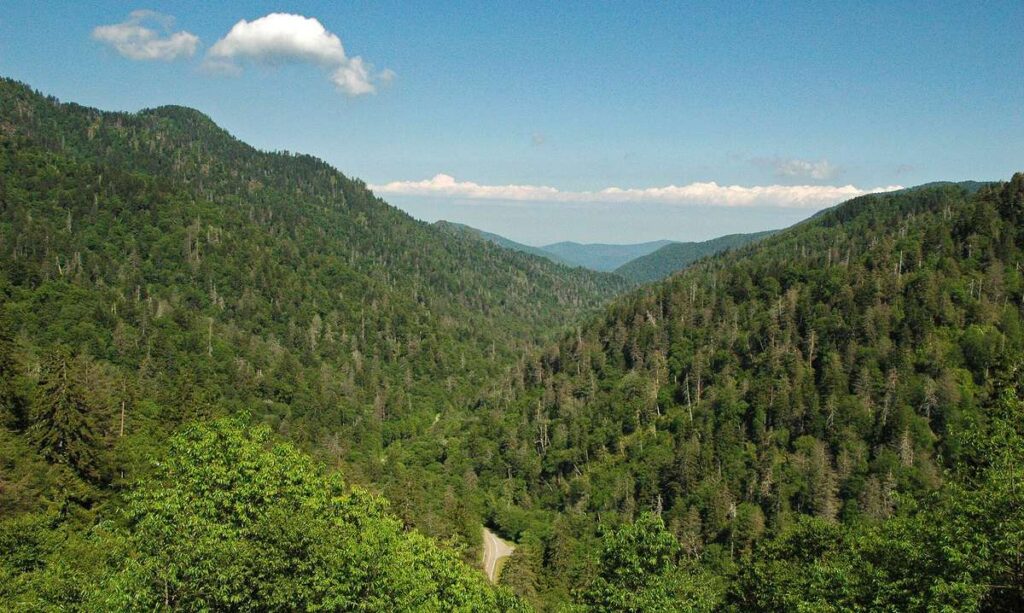
A trip to the Great Smoky Mountains doesn’t have to blow up your savings. Because the national park itself has no entrance fee, the real cost of a visit comes down to lodging, food, and how many paid attractions you add on top of a free mountain landscape.
This guide breaks down a realistic 3-4 day budget trip for a couple or small family, with real dollar ranges for each category so you can see exactly where a $1,000 trip goes and where to cut if you need to spend even less.
Quick Answer
A 3-4 night Smoky Mountains trip for under $1,000 is doable by booking a budget hotel or off-season cabin outside Gatlinburg or Pigeon Forge, cooking some meals instead of eating out every night, buying a park parking tag ($5/day, $15/week, or $40/year) instead of paying for extras, and filling most days with free hikes, waterfalls, and scenic drives rather than paid attractions.
Where Your $1,000 Actually Goes
Lodging is the biggest line item. Budget hotels in Gatlinburg and Pigeon Forge start in the $50-$65 per night range, and cabins outside the main tourist strips, in areas like Sevierville or Wears Valley, are often cheaper per night than comparable cabins inside city limits, especially if you rent one with a kitchen and split it among more people. Plan on roughly $150-$300 for three nights if you book a basic hotel room or a modest off-peak cabin.
Park access is close to free. The Great Smoky Mountains has no entrance fee, but every vehicle parked for more than 15 minutes needs a parking tag: $5 for a day, $15 for a week, or $40 for the year. For a multi-day trip, the weekly tag at $15 covers your whole visit. Note that America the Beautiful passes (Senior, Military, Access) do not cover the parking tag requirement, so budget for it separately.
Food is where a lot of trips overspend. Grocery runs for breakfast and lunch, plus one or two sit-down dinners instead of three meals out every day, can keep a family’s food cost for a long weekend in the $150-$250 range. Pigeon Forge and Gatlinburg both have grocery stores, so stocking a cooler or cabin fridge on day one pays off quickly.
Gas and incidentals round out the budget. Depending on how far you’re driving in, set aside $50-$150 for gas, plus a cushion of $50-$100 for parking at paid attractions, souvenirs, or an unplanned treat. That leaves room in a $1,000 total even after lodging, park access, and food.
Free and Low-Cost Things to Fill Your Days
The park itself is the best budget attraction you have. Newfound Gap Road runs about 33 miles between Gatlinburg and Cherokee, North Carolina, with pull-offs and overlooks the whole way, and it’s free once you have your parking tag. Cades Cove Loop Road is another free scenic drive with historic cabins and good wildlife-viewing odds, especially early morning or evening.
Waterfall hikes cost nothing but a parking tag and some daylight. Note that Laurel Falls Trail, one of the park’s most popular easy hikes, has been closed for rehabilitation work since early 2025 and isn’t expected to reopen until sometime in 2027, so leave it off your list for now. A good stand-in is Cataract Falls, a short, mostly paved, family-friendly path from the Sugarlands Visitor Center near Gatlinburg to a small cascade. For a longer payoff, Abrams Falls near Cades Cove is a more challenging round-trip hike to a wide, powerful waterfall.
If you want a splurge day, pick one paid attraction instead of several. Gatlinburg and Pigeon Forge have plenty of ticketed attractions, but picking just one (rather than stacking several over a trip) keeps a budget trip from quietly turning into a $2,000 one.
Tips / Common Mistakes
Don’t skip the parking tag thinking the park is entirely free. It’s one of the most common surprises for first-time visitors: there’s no gate to pay at, but rangers do check for tags on parked vehicles, and you can buy one online in advance or at park visitor centers and many local businesses.
Check current trail conditions before you go. The park runs ongoing rehabilitation projects on popular trails (Laurel Falls Trail is one current example), and a trail that was open on your last trip may be closed or have limited-day access now.
Avoid booking lodging directly inside Gatlinburg or Pigeon Forge’s busiest stretches if you’re on a tight budget. Properties a short drive out, in Sevierville, Wears Valley, or Pittman Center, are frequently less expensive for a similar room or cabin.
Travel midweek and outside peak leaf season (October) or summer if your schedule allows. Lodging rates in the Smokies swing significantly with the calendar, and a Tuesday-to-Friday trip in a shoulder month can cost noticeably less than the same nights over a weekend in peak season.
Pack a cooler. Between groceries for breakfast/lunch and snacks for the trail, a cooler is one of the simplest ways to cut food costs on a multi-day trip without feeling like you’re skipping meals out entirely.
Explore more: more Smoky Mountains trip planning guides.
Smoky Mountains budget trip FAQs
Is there an entrance fee for Great Smoky Mountains National Park?
No traditional entrance fee, but a parking tag is required for any vehicle parked longer than 15 minutes: $5 per day, $15 per week, or $40 per year.
Can I visit the Smoky Mountains on a budget without camping?
Yes. Budget hotels in Gatlinburg and Pigeon Forge start around $50-$65 a night, and cabins outside the main tourist areas can be comparable or cheaper, especially split among a group.
What’s the cheapest time of year to visit the Smokies?
Lodging tends to be least expensive outside summer and October leaf season, and midweek stays are generally cheaper than weekends, even in the same month.
Do I need a car in the Smoky Mountains?
Yes, a car is essentially required to reach trailheads, scenic drives, and most lodging, since the park and surrounding areas are spread out with limited public transit.
Plan Your Smokies Trip
Build your own Smoky Mountains itinerary — save the cabins, attractions, and restaurants you want to hit. Try the free ExploreTheSmokies trip builder.
Photo: James St. John / CC BY 2.0, via Wikimedia Commons.